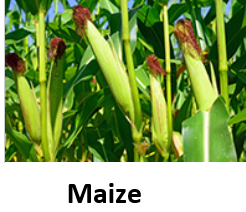
Overview:
- Scientific Name: Zea mays
- Type: Cereal grain
- Origin: Central America
Climate and Soil Requirements:
- Climate: Maize grows best in warm climates with temperatures between 20°C to 30°C.
- Temperature: Optimal temperature range is between 25°C to 30°C during the growing season.
- Soil Type: Well-drained loamy soil with a pH level between 5.8 to 7.0.
Varieties:
- Common Varieties: Common maize varieties include Dent, Flint, Flour, and Sweet.
Season:
- Planting Season: Plant maize in the spring when soil temperature reaches 10°C or higher.
- Harvest Season: Harvest typically occurs in late summer or early autumn.
Cultivation Process:
- Seed Selection and Planting:
- Choose high-quality seeds of a suitable variety based on local climate and soil conditions.
- Plant seeds at a depth of 1 to 2 inches and spaced about 8 to 12 inches apart in rows.
- Ensure adequate moisture for germination.
- Fertilization:
- Apply nitrogen, phosphorus, and potassium fertilizer based on soil test recommendations.
- Side-dress with nitrogen fertilizer when maize plants are knee-high.
- Watering:
- Provide consistent moisture, especially during the critical growth stages of tasseling and silking.
- Maize requires about 1 to 1.5 inches of water per week.
- Weed Control:
- Control weeds through mechanical cultivation or herbicide application.
- Weed early and regularly to prevent competition with maize plants.
- Disease and Pest Management:
- Monitor for common maize pests such as corn borers and armyworms.
- Use integrated pest management techniques and consider resistant varieties.
- Harvesting:
- Harvest when maize kernels are fully developed and milky or doughy in texture.
- Check for maturity by pressing a thumbnail into a kernel; if the liquid inside is milky, maize is ready for harvest.
- Use a combine harvester to efficiently harvest the crop.
Additional Tips:
- Rotate maize crops with other crops to minimize disease and nutrient depletion.
- Monitor weather conditions and adjust cultivation practices accordingly.
- Consult local agricultural extension services for specific recommendations and support.