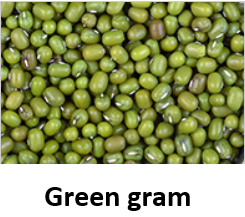
Overview:
- Scientific Name: Vigna radiata
- Type: Leguminous crop
- Origin: Indian subcontinent
Climate and Soil Requirements:
- Climate: Green gram grows best in warm and humid climates.
- Temperature: Optimal temperature range is between 25°C to 35°C during the growing season.
- Soil Type: Well-drained loamy soil with a pH level between 6.0 to 7.5.
Varieties:
- Common Varieties: Common green gram varieties include Pusa Vishal, Pusa Ratna, and Pusa Baisakhi.
Season:
- Planting Season: Plant green gram in the summer or rainy season.
- Harvest Season: Harvest typically occurs in about 60-90 days after sowing.
Cultivation Process:
- Seed Selection and Planting:
- Choose high-quality seeds of a suitable variety.
- Plant seeds at a depth of 3 to 5 cm and spaced about 10 to 15 cm apart in rows.
- Ensure adequate moisture for germination.
- Fertilization:
- Apply well-decomposed farmyard manure or compost before sowing.
- Top-dress with nitrogen fertilizer at the time of sowing and again after 30 days.
- Watering:
- Provide irrigation during critical growth stages, especially flowering and pod formation.
- Ensure soil moisture is consistent but avoid waterlogging.
- Weed Control:
- Control weeds through timely and shallow cultivation.
- Use pre-emergence herbicides to prevent weed growth.
- Disease and Pest Management:
- Monitor for pests such as aphids and diseases like powdery mildew.
- Apply appropriate insecticides and fungicides as needed.
- Harvesting:
- Harvest when pods turn yellowish-green and seeds are fully mature.
- Use a sickle or combine harvester for harvesting.
- Allow harvested green gram to dry in the sun and thresh to separate seeds from pods.
Additional Tips:
- Rotate green gram crops with cereals to maintain soil fertility.
- Consult local agricultural experts for specific recommendations and support.