Introduction
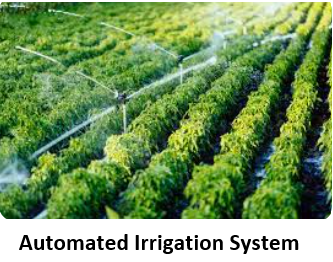
Automatic irrigation is the use of a device to operate irrigation structures so the change of flow of water from bays can occur in the absence of the irrigator...
Benefits of automatic irrigation
The benefits of automatic irrigation are:
- Reduced labour
- Timely irrigation — plants being watered when needed
- Management of higher flow rates
- Accurate cut-off of water compared to manual checking
- Reduced runoff of water and nutrients
- Reduced costs for vehicles used to check irrigation
Disadvantages of automatic irrigation
The disadvantages of automatic irrigation are:
- Costs for purchasing, installing and maintaining the equipment
- Reliability of irrigation system (due to human error when setting up)
- Increased maintenance of channels and equipment to ensure it is working properly
Before installing automatic irrigation
Develop a whole farm plan for your property. During the development of the farm plan, consider automatic irrigation in the planning process so you can incorporate some of the features required for automation from the start. This might involve design of the channels for channel automation if possible — or it might be the use of bay outlets and other channel structures that will suit automation at a later stage.
Installing the automatic irrigation
When it comes to installing the irrigation there are a number of ways of getting started.
- Automate the areas chosen for irrigation at night time — so appropriate irrigation flow rates can be achieved..
- Automate those areas that are difficult to irrigate — areas of short steep bays that require the irrigator to be present more often or require frequent changes.
Things to be aware of
Automation is not only suited to areas of the farm that have been laser-graded. Non-lasered areas can also be automated. This can include automation of the channel structures to irrigate sections of the non-lasered areas. Using the information from a whole farm plan— channel structures that will be used when the development works are carried out — can be purchased and used to automate these non-lasered areas. This can be done with the knowledge that the structures will be suitable for use after the development work is carried out.
Choosing the best automated irrigation
All systems of automation have advantages and disadvantages that need to be considered when deciding which system will suit the irrigation layout for a particular property. There is no system that will be the best system for all properties. If a system that can be moved around the property, and perhaps used on other properties, is required then you need to consider systems that are portable. If you want a system where the components are fixed and can follow the same irrigation sequence each irrigation — a fixed system would be more appropriate. In determining the best system for a property, you will need to consider:
- the cost of the system
- back up servicing of the system
- which system will best suit your property and irrigation layout.
Types of automatic irrigation systems
Pneumatic system
A pneumatic system is a permanent system activated by a bay sensor located at the cut-off point. When water enters the sensor, it pressurises the air, which is piped to a mechanism that activates the opening and closing of irrigation structures.
Portable timer system:
A portable timer system is a temporary system which uses electronic clocks to activate the opening and closing of the irrigation structures. Because of its portable nature, 4 or 5 units are usually purchased to move around the whole property.
Timer or sensor hybrid:
As the name suggests, this system is a hybrid of portable timer and sensor systems.
Like a portable timer, it uses an electronic device to activate the opening and closing of the irrigation structures.
This system has an additional feature of the irrigator being able to place a moveable sensor down the bay. When it comes in contact with water, transmits radio signals to the timer devices at the outlets to open or close the structures. It then sends a radio message to a receiver to let the landowner know water has reached the cut-off points down the bay.
Supervisory Control and Data Acquisition (SCADA):
Automation systems that use SCADA consist of a personal computer and software package to schedule and control irrigation via a radio link.
Signals are sent from the computer to control modules in the paddock to open and close irrigation structures with linear actuators.
Bays are opened and closed on a time basis. Some systems have the capacity to automatically alter the time a bay outlet is open, if the channel supply is inconsistent.
SCADA based systems have the additional benefit of being able to start and stop irrigation pumps and motors.