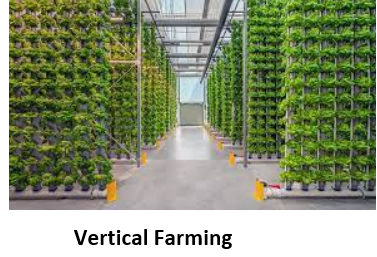
What is Vertical Farming?
Vertical farming refers to the system of cultivating crops in vertically stacked layers, instead of a single surface, like a greenhouse or field. Generally, cultivators incorporate these into vertical structures, such as shipping barrels, skyscrapers, used warehouses, and abandoned mine shafts. This farming method uses Controlled Environment Agriculture (CEA) technology to monitor required humidity, temperature, gases, and light in indoor conditions. For instance, farmers use artificial lighting and metal reflectors to mimic natural sunlight.
How does it work?
Here are the four primary factors affecting vertical farming:
- Layout: As already mentioned, farmers cultivate crops on tower-like structures to maximize food production while limiting resource usage.
- Timely irrigation — plants being watered when needed
- Light: Cultivators use a combination of artificial and natural light, along with technologies like rotating beds to ensure optimum lighting efficiency.
- Sustainability: Vertical farming intends to minimize the exhaustion of natural resources. As a result, this farming technique recycles irrigation water to minimize usage by up to 95%. At the same time, farming indoors requires negligible agrochemicals, thereby saving more resources.
- Growing medium: Vertical farming uses soilless agriculture, such as aquaponics, aeroponics, and hydroponics. Cultivators also commonly use coconut husks and peat moss as growing mediums.
Techniques of Vertical Farming
- Hydroponics: This method involves propagating plant growth without soil in nutrient-enriched water. There are several sub-methods under this technique. Probably, the most common hydroponics technique is the floating raft system. Growers place a polystyrene raft in a large container holding water and nutrients for the plants. The raft has holes or net pots to grow the light-weight, fast-growing plants, like lettuce and spinach, or herbs such as basil, cilantro, and parsley
- Reliability of irrigation system (due to human error when setting up)
- Aquaponics: Aquaponics is soilless farming that integrates aquaculture, where producers raise fish and other aquatic animals in a closed environment, and hydroponics, into one production system. The excrement these fishes produce acts as fertilizer for crops, mimicking how natural ecosystems use organic waste from one element to benefit another. An aquaponic system is incredibly water-efficient, where about 1/6th of the water can produce up to eight times more food per acre when compared to traditional agriculture
- Aeroponics: This technique is an advanced form of hydroponics that uses nutrient-rich mists instead of water. Unlike the earlier two systems, this one has no growing medium. Cultivators plant the seeds in pieces of foam stuffed into small pots. While the plant crown remains exposed to light, the roots get nourishment from the periodical spraying of nutrient-rich water or fine, high-pressure mist. The inspiration for this method came from NASA trials on crop cultivation in space. Aeroponics also promotes faster plant growth than the above methods and is highly water-efficient.
Vertical Farming- The Future of Agriculture?
The main objective of vertical farming is to maximize yield against minimal usage of natural resources. It promotes precision agriculture as well as sustainable agriculture way more than traditional techniques of cultivation. Here, the vertical method of cultivation aims to overcome the challenges posed by conventional farming techniques. These are
- Unpredictable climatic conditions: Vertical farming involves growing crops indoors under controlled environmental conditions. It enables farmers to cultivate crops all year round without the risk of yield loss to adverse weather conditions.
- Plant diseases: Controlled indoor conditions of cultivation, including non-soil growing mediums, minimise the occurrence of pest infections or genetic crop diseases. In turn, this helps farmers limit the usage of crop protection products.
- Long supply chain: The nature of vertical farming allows cultivators to set up farms in urban locations with extensive transport networks. It reduces the distance, time, and the middlemen involved for end-products to reach customers. Acting as a shield against all the above challenges makes vertical farming highly popular across the globe