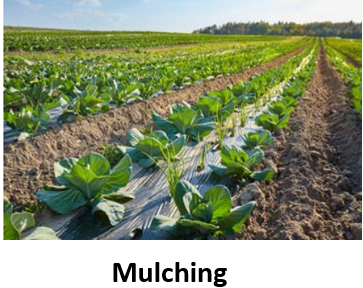
What is Mulch?
Mulch refers to any material spread over the soil surface to protect and improve it. Mulch can be organic (derived from plant materials) or inorganic (synthetic or mineralbased).
Types of Mulch:
Organic Mulch: Organic Mulch: Includes materials like wood chips, bark, straw, leaves, grass clippings, compost, and shredded newspaper. Organic mulches decompose over time, adding organic matter to the soil and improving its structure.
Inorganic Mulch: Includes materials like plastic sheeting, landscape fabric, gravel, and pebbles. Inorganic mulches do not decompose and are often used in areas where longterm weed suppression is desired.
Benefits of Mulching:
- Weed Control:Mulch suppresses weed growth by blocking sunlight, which inhibits weed seed germination and reduces the growth of existing weeds.
- Moisture Retention: Mulch acts as a protective barrier, reducing water evaporation from the soil surface and helping to retain soil moisture. This is especially beneficial during hot and dry periods.
- Soil Temperature Regulation: Mulch insulates the soil, keeping it cooler in hot weather and warmer in cold weather. This moderates temperature fluctuations, creating a more stable environment for plant roots.
- Soil Improvement: : Organic mulches gradually break down, enriching the soil with organic matter, nutrients, and beneficial microorganisms. This improves soil structure, fertility, and drainage over time.
- Erosion Control: Mulch helps prevent soil erosion by reducing the impact of raindrops...
Application of Mulch:
Thickness: Mulch helps prevent soil erosion by reducing the impact of raindrops and wind on the soil surface
Spacing: : Leave a small gap (1 to 2 inches) between the mulch and the base of plants to prevent moisture-related issues and discourage pests.
Renewal: Mulch may break down over time, so it's important to replenish it periodically to maintain its effectiveness. This is typically done once or twice a year.
Considerations:
Mulch Selection: : Choose mulch based on availability, cost, aesthetic preferences, and specific gardening needs. Different mulch materials offer varying benefits and appearances.
Mulching Around Trees: When mulching around trees, create a mulch ring with a diameter of at least 3 feet (1 meter) around the trunk to prevent moisture-related problems and discourage pests.
Weed Control: While mulch suppresses weed growth, it may not eliminate weeds entirely. Weed seeds can still germinate on top of mulch, especially if blown by wind or carried by animals. Periodic weeding may still be necessary. By applying mulch correctly, gardeners and landscapers can enjoy its numerous benefits, including weed suppression, moisture retention, soil improvement, and temperature regulation, leading to healthier plants and more successful gardens.