Crop Rotation
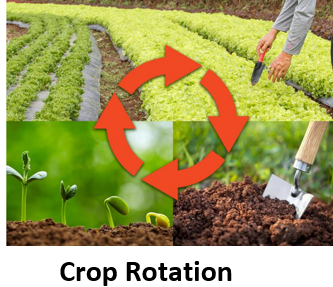
Crop rotation is a farming practice that involves growing different types of crops in a planned sequence on the same piece of land over several seasons or years. It is an ancient agricultural technique with numerous benefits for soil health, pest and disease management, and overall crop productivity. Here's a detailed explanation of crop rotation:
Purpose and Benefits:
Soil Health: Different crops have varying nutrient requirements and root structures. Crop rotation helps maintain soil fertility by balancing nutrient uptake and replenishment, preventing depletion of specific nutrients.
Pest and Disease Management: Rotating crops disrupts pest and disease cycles since many pests and diseases are specific to certain plant species. By planting different crops, farmers can break these cycles and reduce the buildup of pathogens and pests in the soil.
Weed Control: Crop rotation can help suppress weed growth by interrupting weed life cycles and exploiting different weed vulnerabilities
Improved Yields: Rotating crops can enhance overall crop yields by optimizing soil health and minimizing pest and disease pressures.
Crop Rotation Patterns:
Sequential Rotation: In this method, crops are rotated in a specific sequence. For example, a three-year rotation might involve planting corn in the first year, followed by soybeans in the second year, and then wheat in the third year.
Systematic Rotation: This method involves dividing crops into different categories based on their characteristics (e.g., legumes, cereals, root crops) and rotating through these categories in a planned sequence
Cover Crop Rotation: Cover crops, such as legumes or grasses, are planted during fallow periods or between cash crop rotations to improve soil health and prevent erosion.
Crop Rotation Principles:
Diversity: Include a diverse range of crops with different nutrient requirements, growth habits, and root structures in the rotation.
Rotation Interval: The length of the rotation cycle depends on factors like climate, soil type, and specific crop requirements. Common rotation intervals range from 2 to 7 years.
Rotation Planning: Consider factors such as crop compatibility, market demand, and soil management goals when planning crop rotations.
Soil Testing: Regular soil testing helps determine nutrient levels and adjust crop selection and fertilization practices accordingly.